
The Under the Couch book series captivates young readers with its enchanting adventures and magical worlds. Beyond the excitement of experiencing new places and situations, these books highlight two young brothers – the oldest who has ADHD and anxiety, and the youngest who has dyslexia.
These characters are based on my two sons, who both have ADHD and dyslexia. While I don’t explicitly state that the characters have these disorders, young readers with similar traits may see themselves in Spencer or Justin.
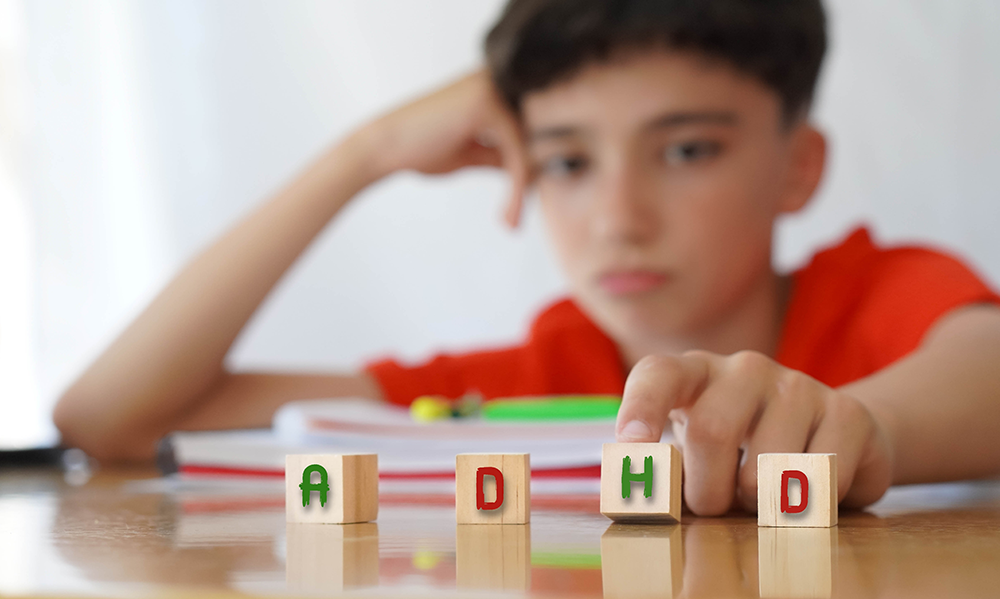
This blog is about how I first learned that my oldest son had Attention Deficit Hyperactivity Disorder (ADHD).
A Mom Learning About ADHD
I didn’t know much about ADHD, having grown up in the 1970s. I had heard the term “ADD” used to describe a few unruly boys in elementary school, but that was about it. These were the boys who couldn’t stay still in their seats and were disruptive in class. They were the problem kids. I remember a classmate saying they needed to be on Ritalin. I assumed that was some sort of medication to calm them down. So, I grew up thinking ADD was about hyperactive and disruptive kids.
ADD was officially changed to ADHD in 1987. Here’s the source with the full link:
https://pmc.ncbi.nlm.nih.gov/articles/PMC5724393/
The “H” was added to recognize hyperactivity as a key feature of this disorder.
My oldest son was relatively well-behaved in school (his class had a lot of rambunctious boys). Imagine my surprise when his fourth-grade teacher told me she thought I should have my son tested for ADHD. She shared that she had ADHD and recognized the signs. I didn’t take her seriously. He wasn’t hyper; he was a typical boy who, while not perfect, definitely wasn’t unruly. And his grades were good (not great).
By this time, I was starting to hear about more kids being diagnosed with ADHD. I didn’t think my son had it and besides, I didn’t want my son on medication … given my limited understanding.
A year later, my son’s fifth-grade social studies teacher told me the same thing. Surprised to hear it again, I argued with her because she had just told me he didn’t cause problems in her class. She replied that he was quiet in her class because he wasn’t there. What? He was physically in her class but not mentally. He was inattentive, didn’t participate, and didn’t take notes. She said he stared out the window and was a million miles away.
But I still wasn’t convinced, and besides, I was busy taking care of two parents and working full-time. His grades were fine, and he could focus on subjects when he wanted to. He was bored sitting all day in class. I chalked it up to him being lazy and not trying hard enough.
When he entered high school and classes got harder, his grades were not as good. He couldn’t get by with minimal effort. He told me he had trouble staying awake and focusing. It was very hard for him to sit in his seat for the entire class. That’s when I started reading about ADHD and learned that it was so much more than hyperactivity. I realized that my son had key symptoms. I took him to the psychologist the school recommended who specialized in learning disorders. She did extensive testing and came back with the diagnosis: ADHD and other issues, too.
I should have listened to the teachers and sought knowledge earlier so I would have understood more about the disorder. I would have learned that the “H” could also mean hyperfocus. I knew he could focus for hours on topics that interested him. But importantly, I could have gotten him help to learn how to deal with his focus (and other) issues. He was struggling, and I didn’t fully realize the extent, or the reasons why.
The Takeaway
If your child is struggling, testing can help identify learning challenges and give your child and you the knowledge and tools to support their success. For reliable information on ADHD evaluation and diagnosis, visit the CDC’s guide: https://www.cdc.gov/adhd/diagnosis/index.html
For treatment options, including behavioral therapy and medication, the National Institute of Mental Health provides a helpful overview:
https://www.nimh.nih.gov/health/publications/attention-deficit-hyperactivity-disorder-adhd-the-basics