
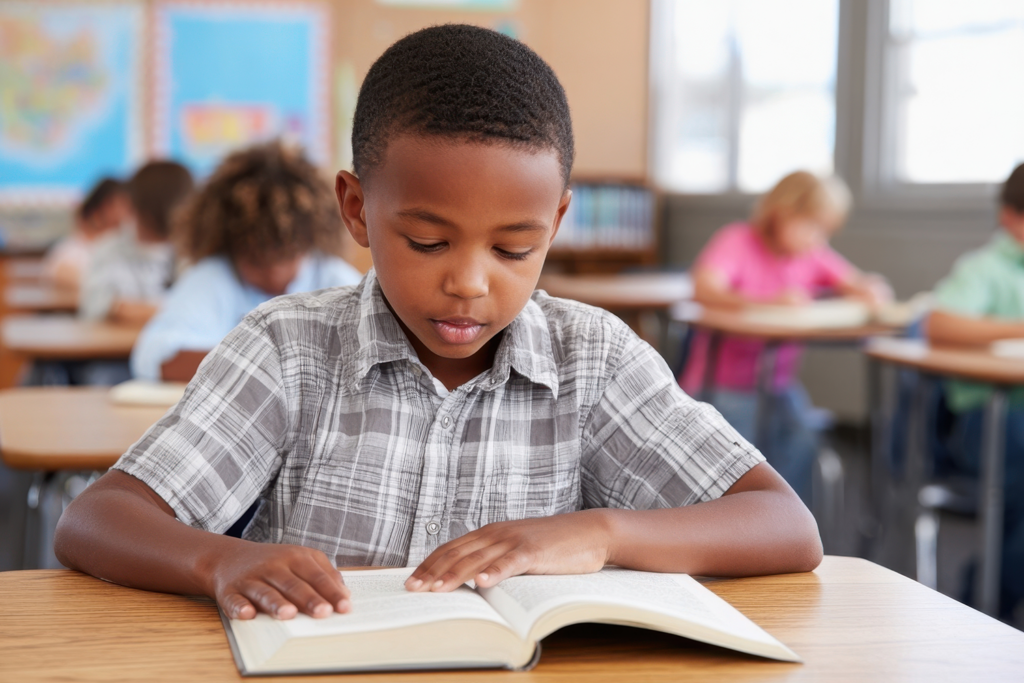
In almost every classroom, there is a student who avoids reading.
Maybe they say, “I don’t like books.” Maybe they stare at a page while everyone else is reading. Maybe they always seem to “forget” their independent-reading book at home.
And sometimes, the real story is more complicated.
A child who appears to be a reluctant reader may actually be struggling with reading fluency, comprehension, vocabulary, attention, or a learning difference such as dyslexia. After enough frustration, it’s easy for a child to decide: Reading isn’t for me.
That is the cycle educators are trying to break.
The right book can be an important place to start.
Why the Right Book Matters
The Under the Couch series was created with reluctant and struggling readers in mind—and with a very personal understanding of what can make reading feel difficult.
The author’s two sons, who are represented in the series, both struggle with reading. Both have ADHD, and the younger son, Justin, is dyslexic and also experiences eye-tracking challenges. For Justin, a page crowded with text, unfamiliar vocabulary, or a story that didn’t immediately capture his attention could quickly feel overwhelming. Instead of pushing through, he would often look for shortcuts to avoid reading altogether.
That experience shaped one of the central beliefs behind the series: If we want kids to read, we have to give them books that invite them in; books that make reading feel more approachable and fun, with stories and characters that capture their interest and imagination — not books that make them think of reading as a chore.
The goal isn’t to make reading less meaningful or less challenging. It’s to make the first step feel possible. Books with engaging stories, relatable characters, manageable text, and plenty of visual interest can help lower the barrier to getting started—and give kids a reason to keep turning the page.
Because sometimes the difference between “I don’t want to read” and “I want to know what happens next” is simply finding the right book.
What the Research Says About Reluctant Readers
The trend lines are sobering.
Scholastic’s Kids & Family Reading Report, a national biennial survey, has found that reading for fun and positive attitudes toward reading decline significantly around age nine. That makes the elementary years an especially important time to help children develop a lasting reading identity.
At the same time, Reading Rockets emphasizes the importance of giving struggling readers books they both can and want to read — books with accessible text, engaging characters, and subjects that connect with their interests.
That distinction is critical.
A book can be appropriately challenging without being discouraging.
Three Things Books for Reluctant Readers Need to Deliver
1. Momentum
For a struggling reader, a 300-page novel can look like a formidable mountain.
Shorter chapters create achievable finish lines. A fast-moving plot, humor, suspense, and a reason to keep turning the page can create momentum.
Every finished chapter is a small win. And those small successes can begin to change how a child sees themselves:
- I finished a chapter.
- I finished a book.
- I want to know what happens next. Maybe I can keep reading ….
- Maybe I am a reader after all.
The goal isn’t simply to get a child through one book. It’s to help them experience the satisfaction of finishing a book or even an entire series!
2. Characters Who Feel Real
Reluctant readers don’t necessarily need characters who are exceptional.
They often need characters who are recognizable and relatable.
Spencer isn’t a superhero. He’s frustrated about moving, annoyed by his little brother, suspicious of his new nanny, and nervous about starting a new school. He’s also reserved and struggles with focus and anxiety.
His younger brother, Justin, is almost his opposite. He’s funny, carefree, athletic — and he struggles to read.
Those differences are intentional.
Children don’t all experience the world in the same way, and seeing pieces of themselves in a character can make a story feel personal rather than assigned. They respond to characters whose problems look like their own.
3. A Next Book Waiting
One of the biggest advantages of a series is simple: the next book is already there.
For a child who has just finished a book, choosing what to read next can create another barrier. A series eliminates that decision.
When a reluctant reader finishes Book 1 and reaches for Book 2 because they genuinely want to know what happens next, something important has happened.
They’re no longer reading simply because an adult told them to.
They’re reading because they are interested and want to know what happens next.
That’s exactly what the author hoped to create with the Under the Couch series.
The books are approximately 100 pages, divided into 12 chapters, with vocabulary, formatting, and font choices designed to make the reading experience more approachable. The story unfolds across 12 books, following one continuous, increasingly mysterious summer of under-the-couch adventures.
And there is a larger reason to keep reading: readers have to reach the end of Book 12 to fully unravel the mysteries hidden under the couch.
What Should Teachers (or Parents) Look For?
When choosing books for reluctant or struggling readers, look beyond reading level. The right book should feel approachable enough to start, engaging enough to continue, and rewarding enough to finish.
Look for:
- Manageable length — Does the book feel achievable rather than overwhelming?
- Shorter chapters — Are there frequent opportunities to reach a natural stopping point and experience success?
- Inviting pages — Does the page feel visually approachable, or does it look like a wall of text?
- Engaging plots — Does the story draw the reader in quickly and give them a reason to keep turning the page?
- Relatable characters — Are the characters likable, interesting, or familiar enough for students to see something of themselves in the story?
- Humor and emotion — Does the book make them laugh, surprise them, or make them feel something?
- Series potential — Is there another story waiting if they finish this one?
- Opportunities to learn — Can children discover something new while simply enjoying the story?
And perhaps most importantly: When the child reaches the end of a chapter, do they want to know what happens next?
Because for a reluctant reader, that desire to keep reading may matter more than any reading-level designation.
Not every reluctant reader is simply reluctant.
Sometimes, what looks like a lack of interest in reading is actually a child trying to protect themselves from something that feels difficult, frustrating, or embarrassing.
Some struggling readers learn to hide their difficulties because they’re afraid of being teased or of being seen as less capable than their classmates. Others may have dyslexia, focus issues, or another learning difference that makes reading more challenging.
The International Dyslexia Association explains that dyslexia is a language-based learning disability—not a reflection of intelligence or effort—and that students with dyslexia can learn successfully with appropriate instruction and support.
That distinction matters.
A child who avoids reading may not need more pressure. They may need someone to recognize what’s getting in the way.
They may need the right support, the right instruction, and sometimes, the right book.
The goal isn’t to lower expectations. It’s to remove unnecessary barriers so children can experience success—and begin to see themselves as readers.
The Reading Struggles page and the article on early signs connected with dyslexia on the underthecouchbooks.com website share more about our family’s experience and what we learned along the way.
Five Simple Things Teachers Can Do
You don’t have to completely redesign your reading program to help reluctant readers.
Start small:
- Put high-interest books where kids can see them.
Make the covers visible. Let students browse. Create a “books you might actually like” section. - Let students reread.
Rereading isn’t a failure. For a struggling reader, rereading a book they enjoyed can build fluency, confidence, and familiarity. And they may see things reading a book a second time that they missed the first time. - Don’t shame reading level.
A child’s reading level is information for the teacher — not an identity for the child. - Protect independent reading time.
Give students time to read books they have chosen, without turning every reading experience into an assessment. - Celebrate finishing.
For a reluctant reader, finishing a book can be a big deal. Treat it as a win!
The Goal Isn’t Just a Finished Book
The ultimate goal isn’t to get a reluctant reader through 100 pages; it’s to change what happens the next time they walk into the classroom.
Instead of “I hate reading,” maybe they say: “Do you have the next one?”
That’s the moment we’re looking for.
Because when a child discovers a story they can’t put down, reading stops feeling like homework and starts feeling like an experience.
The right book can be a portal — not just into an adventure, but into a new idea about who that child can become: a reader.
Looking for books reluctant readers will actually want to finish?
Explore the Under the Couch series and discover Spencer, Justin, and the mysterious world waiting under the couch.