
In the Under the Couch series, a couch become a portal to adventure. Two brothers, Spencer and Justin, go under the couch that their dad bought at an antique store and soon they are in a different world filled with fun, danger, and experiences that teach valuable life lessons.
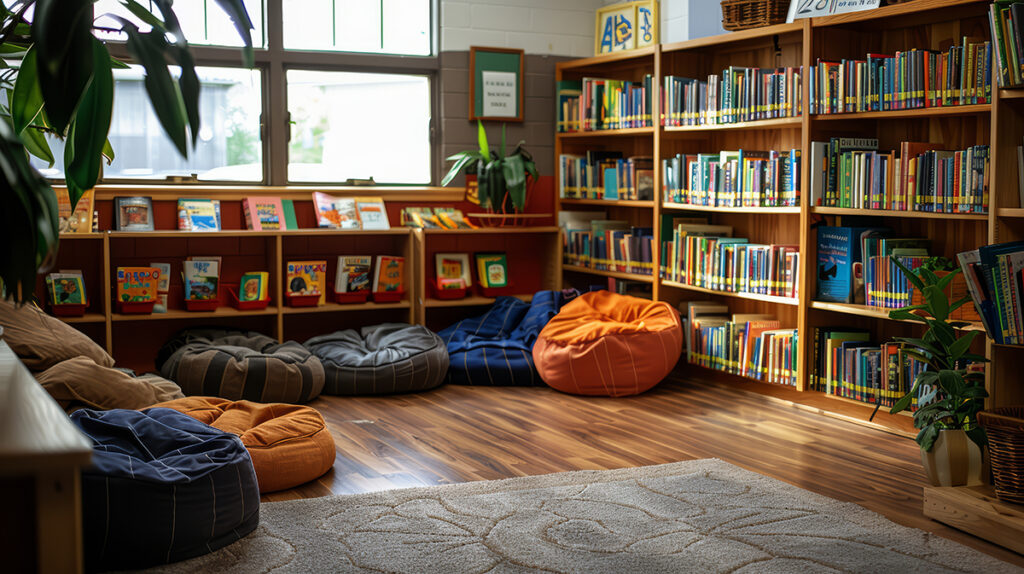
A great classroom library can work the same way.
From the outside, it may look like a collection of books on a shelf. But for the right child, the right book can be a doorway—to curiosity, confidence, imagination, and a lifelong love of reading.
The challenge is making sure every child can find a doorway that opens for them.
Access Is the Starting Point
Research points to an important relationship between children’s access to books, their ability to choose what they read, and their reading engagement. The Scholastic Kids & Family Reading Report has repeatedly found that children value having books available that they can choose for themselves.
That makes the classroom library more than decoration. It is an invitation.
When books are visible, accessible, interesting, and available at a range of reading levels, students have more opportunities to find something they actually want to read.
And for a reluctant reader, wanting to read can be the first breakthrough.
Stock for the Readers You Actually Have
Every classroom has a range of readers.
Some students may be reading above grade level. Others may be working several years below it. Some may decode accurately but have little confidence. Others may read fluently but struggle to find books that hold their interest.
A classroom library should reflect that reality.
Offer a Range of Reading Levels
Don’t make reading level the gatekeeper to your library. A struggling reader needs books they can successfully read—but they also need books that make them want to read.
Reading Rockets emphasizes the importance of helping struggling readers find books they can read and want to read. That means having accessible books alongside more challenging titles, rather than creating a separate shelf that announces to everyone who sees it, “These are the easy books for those who don’t read as well.”
Every student deserves to browse the same library and discover books that fit.
Lead With Series
For many reluctant readers, finishing a book creates a new problem: What do I read next?
A series solves that problem.
For many reluctant readers, finishing a book creates a new problem: What do I read next?
A series solves that problem.
When a child connects with a character or a fictional world, the next book is already waiting. That familiarity can reduce the uncertainty of choosing a new book and create something incredibly valuable for a developing reader: momentum.
One book becomes two.
Two become three.
And suddenly, a child who once resisted reading is asking, “When can I read the next one?”
That is the power of a series.
It’s similar to when we watch a television series on Netflix. We may start with one episode and quickly find ourselves watching another—and then another. We grow attached to the characters, become invested in the stories and the series, and don’t want it to end.
Books can create that same kind of momentum.
The Under the Couch series was designed with that momentum in mind. There are 12 books in the series, and the stories are meant to be read in order as Spencer and Justin gradually unravel the mysteries of the worlds hidden under the couch.
Each book brings a new adventure, but the larger story keeps pulling readers forward. Along the way, readers encounter humor, friendship, courage, and life lessons that give them even more reasons to keep turning the page.
For a reluctant reader, that can be a powerful shift.
Before they realize it, they’ve read one book, then another, then another.
Twelve books later, they haven’t just finished a series. They’ve built the experience of being a reader.
Mirror Your Students’ Lives
Children need a variety of options, including stories that are relatable with characters that have real issues and challenges.
Stock books about friendship, siblings, moving, starting a new school, anxiety, family relationships, making mistakes, feeling different, and figuring out where you belong.
Representation isn’t just about seeing someone who looks like you. It’s also about seeing experiences, emotions, and challenges that feel familiar.
A child may open a book because of the adventure and stay because they recognize themselves in the character.
Don’t Confuse Reading Level With Interest Level
This is especially important for struggling readers. A second-, third-, or fourth-grade reader may be interested in stories about adventure, mystery, humor, animals, sports, or fantasy even when their independent reading skills are below grade level.
Give them books that respect their age and interests while remaining accessible enough for them to experience success. A book can be easy to read, like the Under the Couch books, without being babyish.
That distinction can make all the difference to a child who already feels self-conscious about reading.
Make the Library Easy to Use
A great collection won’t help much if students can’t navigate it independently.
Organize books in ways that make sense to children. Use bins, topics, characters, genres, or series rather than relying entirely on an adult-oriented filing system.
Put books where students can see the covers.
Rotate books throughout the year so the library feels fresh.
Create displays around current interests, classroom themes, holidays, or popular characters.
And give students time to browse.
Choice is part of the experience.
The goal isn’t to create a perfectly organized library that looks impressive to adults. The goal is to create a library children can easily use.
Don’t Underestimate the Power of Rereading
When a child reads the same favorite book five times, it can be tempting to encourage them to “try something new.” Sometimes, let them read it again.
Rereading familiar books can give children something they don’t always get when they are struggling to decode new words: the chance to experience success.
With each reread, a child can become more fluent, recognize words more quickly, strengthen vocabulary, and notice details they may have missed the first time. Because they already know the story, they can spend less energy figuring out what happens next and more time thinking about the characters, language, and meaning.
But there is something else happening, too: Confidence is building.
For a child who has come to associate reading with struggle, frustration, or correction, rereading a favorite book can remind them what it feels like to simply enjoy a story. And that matters.
A favorite book may be more than a book a child loves. For a reluctant reader, a favorite book may be the bridge to the next book.
The Administrator’s Role
For principals and literacy leaders, building a strong classroom library doesn’t have to mean purchasing hundreds of books for every classroom at once.
It can start with a thoughtful, ongoing approach to access.
Consider providing teachers with recurring classroom-library budgets, creating shared school collections, supporting book swaps, and looking for ways to purchase high-interest series in bulk.
Most importantly, ask teachers a simple question: “What books are your students asking for?”
Teachers know which characters students talk about, which series disappear from the shelves, and which books suddenly turn a reluctant reader into a reader. That insight can help make every dollar spent on classroom books more purposeful.
The Takeaway
A great classroom library isn’t the one with the most books.
It’s the one where the most students can find a book they want to (and can) read.
The right book can help a child see themselves differently. It can make a struggling reader feel successful, give a reluctant reader a reason to keep turning pages, or introduce a child to a character they don’t want to leave behind.
In Under the Couch, an ordinary couch becomes a doorway to extraordinary worlds.
Your classroom library can do the same thing.
Build a shelf where every child can find a doorway to adventure.
Explore the Under the Couch series and see how it can fit into your classroom on our Teachers page. You can also meet the characters and discover the worlds waiting under the couch.