
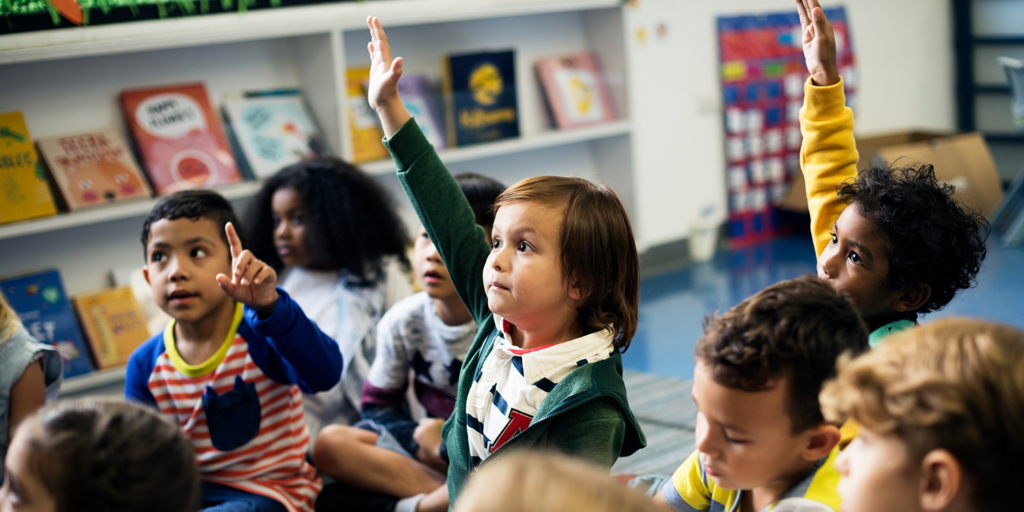
Every teacher has a student who hesitates before raising a hand, worries about getting an answer wrong, avoids trying something new, or freezes when the spotlight turns their way.
The instinct to protect that child is understandable. We want to make things easier. We want to reassure them. And when we see a child struggling with fear, it can be tempting to remove whatever is making them uncomfortable.
But sometimes, what anxious students need most isn’t for adults to remove every source of discomfort. They need someone to help them discover that they can handle difficult situations.
That’s the difference between eliminating fear and building courage.
In the Under the Couch world, Spencer and Justin face real danger. There are rules, consequences, and moments when both boys are genuinely afraid. The Under the Couch series never suggests that feeling fear isn’t normal.
Instead, the brothers learn to make thoughtful decisions, keep going when things get difficult, and act wisely even when they’re afraid.
That’s courage.
Courage isn’t the absence of fear. It’s learning that you can feel afraid without letting fear control what you do next.
And that may be one of the most important lessons we can help children discover: You can be afraid and still be brave. You can feel uncertain and still try. You can face something difficult without having to face it alone.
We explore this theme more deeply in the post Fear Not! Lessons from the Under the Couch Book Series.
What the Research Says About Anxiety and Avoidance
This distinction matters.
Educators are seeing more students who struggle with worry, uncertainty, and fear — and the natural response can be to make things easier for them by removing the source of the discomfort.
Sometimes that is exactly the right thing to do.
But when avoidance becomes the default response to everyday fears, it can make those fears harder to overcome.
The Child Mind Institute explains that helping children avoid what they fear can make them feel better in the short term while reinforcing anxiety over time. A more productive approach is to acknowledge the child’s feelings while communicating confidence that they can handle the situation.
In other words: “I know you’re nervous. And I believe you can do this.”
That’s a very different message from: “You’re nervous, so you don’t have to do it.”
What Courage Looks Like in the Classroom
Building courage doesn’t mean throwing an anxious child into the deep end. It means creating small, supported opportunities to face discomfort and experience success.
1. Start Small: Build Confidence Through Small Challenges … and Wins
Don’t begin with the biggest challenge.
If a student is terrified of speaking in front of the class, start with one sentence to a partner. Then a small group. Then perhaps a sentence to the class.
Small, repeated experiences teach an important lesson: “I was nervous — and I did it anyway.”
Over time, that experience of a win can become its own source of confidence.
2. Protect Productive Struggle
Teachers understandably want to help when a student is struggling.
But sometimes the most valuable thing an adult can do is wait.
Edutopia’s work on productive struggle highlights the value of allowing students to grapple with challenging tasks rather than immediately rescuing them.
Try asking:
- “What have you tried so far?”
- “What’s one thing you could try next?”
- “Do you want a hint or another minute?”
The goal isn’t to let a child struggle unnecessarily. It’s to give them the opportunity to discover that they are capable of working through something difficult. That builds confidence.
3. Normalize the Language of Fear
Make it okay for the student to say:
- “I’m nervous.”
- “I’m can’t do this.”
- “I’m afraid I’ll get the answer wrong.”
Then help students move from naming the fear to thinking about what they can do next.
A teacher might respond: “I understand. It’s okay to be nervous. What’s one small step you can take?”
When fear becomes something students can talk about openly, it becomes more approachable and less of a situation they feel they need to hide or avoid.
4. Separate a Setback From a Verdict
A failed tryout isn’t proof that a student isn’t talented.
A wrong answer isn’t proof that a student isn’t smart.
A difficult presentation — or a case of nerves — isn’t proof that a student is bad at public speaking.
Help students see setbacks as opportunities to learn and grow, not as judgments about who they are.
Instead of focusing only on the outcome, help them reflect on the experience:
What did you learn?
What would you do differently next time?
What went better than you expected?
What was something you did that was difficult but you did it anyway?
Then celebrate the learning — not just the result. Recognize the challenge they faced, the effort they made, the problem they solved, or the courage it took to try.
That shift helps children understand an important truth: courage doesn’t guarantee the outcome we want. It gives us the willingness to face the challenge, learn from the experience, and try again.
5. Don’t Design All the Friction Out of School
Our job isn’t to make sure children never experience disappointment. Our job is to help them learn that they can handle it.
For educators and administrators, this may be one of the harder lessons: creating a supportive environment doesn’t mean removing every difficult or uncomfortable experience.
Children need to feel safe and supported. But they also need opportunities to face healthy challenges, take appropriate risks, experience disappointment, and discover that they are capable of handling things that don’t go exactly as planned.
Tryouts, performances, science fairs, difficult assignments, new friendships, and unfamiliar experiences all carry the possibility of disappointment or failure. That isn’t necessarily a problem to be solved. It’s part of learning how to navigate the real world.
We shouldn’t eliminate every opportunity for discomfort or create an environment where every child is guaranteed success. Not every student will make the team. Not every presentation will go perfectly. Not every friendship will work out.
That doesn’t mean we should push children into situations that are beyond their ability to cope. It means giving them manageable challenges—with the right support—that gradually expand what they believe they can handle.
The message becomes:
“You might not succeed. You might be disappointed. You might even fail. And that’s okay. You can learn from it. You can recover. You can try again. And you can handle what comes next.”
That is a different kind of confidence—not the confidence that comes from knowing you’ll always succeed, but the confidence that comes from knowing you can handle it when things don’t go your way.
And that may be the real goal of teaching courage: not preparing children for a life without fear, disappointment, or failure, but helping them believe they are capable of facing whatever comes next.
What Anxious Students Don’t Need
When a child is afraid, our first instinct is often to make the fear go away.
We might say:
- “There’s nothing to be afraid of.”
- “You’re being silly.”
- “That’s not a big deal.”
- “Don’t worry about it.”
The intention is good. We want to reassure the child and help them feel better.
But even when an adult knows that a child’s fear isn’t based on a real threat, the fear itself is real to the child. Dismissing it doesn’t make it disappear. Instead, it can leave a child feeling misunderstood, embarrassed, or reluctant to talk about their fears in the future.
Children also don’t need adults to immediately take over and solve the problem for them. And they don’t need to be defined by their fear.
A child who is nervous about giving a presentation isn’t “the anxious kid.” A child who is afraid to try something new isn’t “a scared kid.” Fear is something they are experiencing. It isn’t who they are.
What they need is an adult who can acknowledge the feeling without making the fear bigger—someone who can communicate both empathy and confidence: “I see that this is hard for you, and I believe you can handle it.”
An educator might say: “I understand why you’re nervous. I’m here with you. Let’s figure out what you can do next.”
That response does three important things: it validates the child’s experience, communicates that they aren’t alone, and shifts the focus from “How do I make this fear go away?” to “I feel fear, and here’s what I can do next.”
The goal isn’t to convince a child that there is nothing to fear. The goal is to help them discover that they can feel fear, face it, and still move forward.
Because learning how to respond to fear is a skill. And every time a child faces something difficult and discovers, “I handled that,” they build a little more confidence for whatever comes next.
Let Stories Help Children Talk About Courage
Sometimes children are more comfortable talking about a character than talking about themselves.
That’s one reason stories can be such a powerful tool in the classroom.
In the Under the Couch series, Spencer and Justin don’t always know what to do. They face real danger. They get scared. They make mistakes. They face situations they would rather avoid.
But they keep going.
Their adventures give teachers an opportunity to ask questions that can open meaningful conversations:
- What was Spencer afraid of?
- Was he courageous even though he was scared?
- What helped him keep going?
- Have you ever done something even though you were nervous?
- What’s the difference between being fearless and being brave?
- What could Spencer have done differently?
The conversation can start with the characters or the situation — and sometimes, without a student even realizing it, become a conversation about themselves.
The Under the Couch Takeaway
Spencer and Justin come home from their adventures a little braver than when they left.
They don’t become fearless. They become more confident in their ability to face what comes next. Through their experiences, they learn that they can face something difficult, make mistakes, recover, and keep moving forward. Each challenge becomes a chance to discover something important: I can handle this.
That’s a lesson children can carry far beyond the pages of a book.
For teachers, fiction can provide a safe and engaging way to open conversations about fear, courage, resilience, and facing the unknown. A character can experience the fear first, giving children a chance to explore difficult emotions and challenging situations without having to talk about themselves right away.
Sometimes, the best way to help a child understand that they can be brave is to show them a character who was scared—and kept going.
Because courage isn’t about being fearless. It’s about discovering that you can do hard things, even when you’re afraid.
And every time a child faces something difficult and thinks, “I did it. I got through it,” they take one more step toward believing in themselves.
Explore the Under the Couch Teachers page for discussion guides and classroom resources designed to help bring these conversations into your classroom.